Does Homeowners Insurance Cover Water Damage in Georgia?
Need help with your own home?
Tell us your concern. We'll check local contractor availability.
No referral fee · No obligation to hire
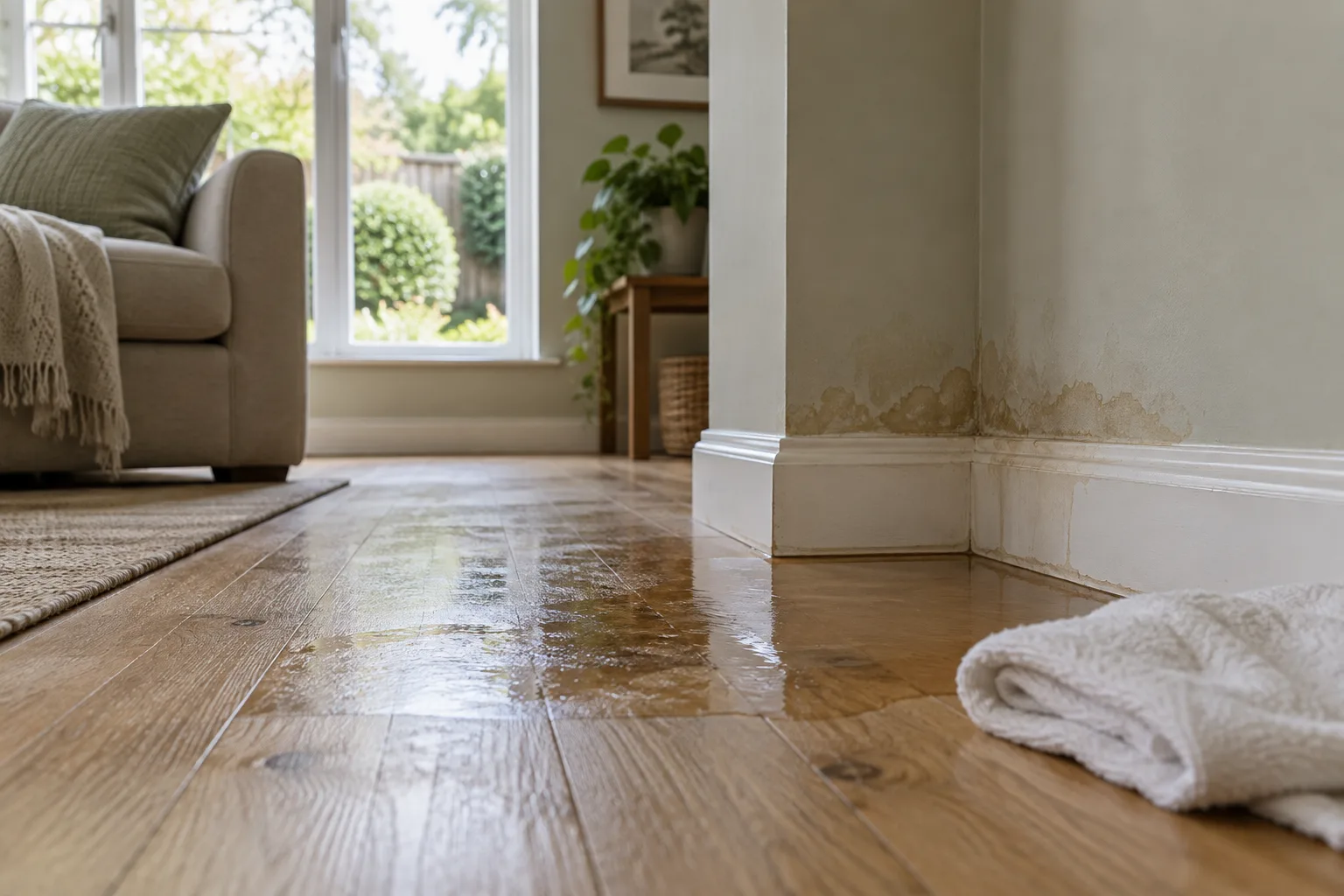
Does homeowners insurance cover water damage in Georgia?
Often, yes. Most Georgia homeowners policies cover water damage that is sudden and accidental, such as a burst pipe or an overflowing washing machine. Damage from gradual leaks, neglected maintenance, or rising-water flooding is typically excluded and may need separate coverage.
The short answer most North Fulton homeowners want: standard homeowners insurance in Georgia usually pays for water damage when the cause is sudden and accidental. A pipe that bursts overnight, a water heater that fails without warning, or rain that pours in through a roof torn open by a storm generally fall on the covered side of the line. Slow, ongoing problems generally do not.
Coverage always comes down to the cause of loss and the exact language in your policy, and the insurer makes the final call. Every carrier and policy differs, so the only authoritative source is your own declarations page and policy booklet. When you need fast help drying out and documenting the loss, we may introduce you to a local contractor, if one is available for a written inspection.
North Fulton Water Damage Pros, operated by Stratum Relay LLC, is a disclosed marketing and referral service for Sandy Springs, Roswell, Dunwoody, Alpharetta, Johns Creek, Brookhaven, and the wider Fulton County area. We are not a contractor and we do not perform restoration work; a local contractor, if one is available, does. There is no fee to request the connection.
What water damage is typically covered in Georgia?
Sudden, accidental events are usually covered: a burst or frozen pipe, a sudden appliance failure like a ruptured water heater or washing-machine hose, and storm-driven rain that enters through sudden roof damage. The triggering event must be abrupt and unexpected, not a slow decline.
Most disputes turn on one idea: was the loss sudden and accidental? If a supply line bursts behind a wall, a dishwasher hose lets go, or a hailstorm punctures shingles and lets rain pour into the attic, those events are typically within the scope of a standard Georgia homeowners policy. The water itself may be clean Category 1 water at first, but it can quickly migrate into drywall, subfloor, and insulation.
Acting quickly protects both your home and your claim. The faster the water is extracted and the structure is dried, the less secondary damage like swelling, delamination, and mold you'll face. Knowing the right first steps after water damage helps you limit the loss before the professionals arrive, which insurers generally expect of you.
- Burst or frozen pipes — a supply line that ruptures suddenly behind a wall or under a slab.
- Sudden appliance failure — a water heater, dishwasher, or washing-machine hose that fails without warning.
- Storm-driven rain intrusion — rain entering through a roof or window opening caused by sudden storm damage.
- Accidental overflows — a tub or sink that overflows in a one-time, unexpected event.
What water damage is usually NOT covered?
Gradual or long-term leaks, damage from deferred maintenance, and flooding from rising water are typically excluded. Flood damage from overflowing rivers or surface water is not covered by standard homeowners insurance and requires a separate NFIP or private flood policy.
Two big exclusions trip up Georgia homeowners. First, gradual damage: a drip under a sink or a slow roof leak that goes unaddressed for weeks or months is usually treated as a maintenance issue, not a covered sudden event. Insurers expect homeowners to keep up with reasonable upkeep, so a long-term leak with visible staining and rot is commonly denied.
Second, and most misunderstood, is the flood exclusion. Standard homeowners insurance does not cover flooding — that is, rising water, surface water, or water that overflows a body like the Chattahoochee River. Flood coverage is a separate product, typically through the National Flood Insurance Program (NFIP) or a private flood insurer. If storm or flood water enters your home, your flood policy, not your homeowners policy, is usually the one that responds.
The distinction matters because the same wet basement can be covered or excluded depending on where the water came from. A burst pipe inside the wall is one thing; groundwater rising up through the slab after heavy Atlanta rainfall is another. Read your policy carefully and ask your agent about flood coverage before you ever need it.
- Gradual leaks — slow drips and long-term seepage treated as maintenance.
- Lack of maintenance — rot, wear, or neglect that built up over time.
- Flooding / rising water — excluded from standard policies; needs NFIP or private flood insurance.
- Surface water and groundwater — water seeping up through a slab or in from outside grade.
Does homeowners insurance cover sewage backup in Georgia?
Usually only if you have added a sewer or water backup endorsement. Standard homeowners policies often exclude backup of sewers and drains, so most homeowners need a specific endorsement to cover Category 3 black water from a sewage backup or backed-up sump pump.
A sewage backup is one of the messiest and most hazardous water losses, and it's also one of the most commonly excluded. Many standard Georgia homeowners policies do not cover backup of sewers and drains unless you've added a water backup or sewer backup endorsement. That endorsement is usually inexpensive and well worth it, but it has to be in place before the loss.
Sewage can contain hazardous contaminants and is not appropriate for unprotected DIY cleanup. Stay clear and contact an available provider with relevant capabilities. Our sewage cleanup guide explains questions to ask about containment, disposal, cleaning standards and safety; this site does not verify or promise a provider's procedures.
Check your declarations page for a backup endorsement and note its dollar limit, which is often capped separately from your main dwelling coverage. If you don't have it, call your agent to ask about adding it.
How do you document a water damage claim?
Document thoroughly before cleanup: take dated photos and video of all damage, make a written inventory of damaged belongings with values, save receipts, and get a professional written scope of the loss. Strong documentation gives the adjuster a clear, factual record to evaluate.
Good claim documentation is what separates a smooth claim from a frustrating one. Before you move or throw anything away, photograph and video everything — the source of the water, the standing water, every affected room, and each damaged item. Capture timestamps where you can, and keep the damaged items until your adjuster has reviewed them, if it's safe to do so.
Build a written inventory of damaged contents with descriptions, approximate ages, and replacement values, and gather receipts or photos that establish what you owned. Pair that with a professional written scope of the structural damage — moisture mapping, thermal imaging findings, and affected materials like drywall, subfloor, and insulation. This kind of detail helps the adjuster understand the full extent of the loss.
Mitigation matters too. Insurers generally expect you to take reasonable steps to prevent further damage, so starting professional drying promptly and keeping records of it strengthens your position.
- Take dated photos and video of the source and all damage before cleanup.
- Create a written inventory of damaged belongings with values.
- Keep receipts for emergency repairs, lodging, and replacements.
- Obtain a professional written scope with moisture readings and affected materials.
How can a written inspection support your claim?
A contractor may offer a written assessment or other documentation, but the contractor decides what is included and any fee. Confirm those terms directly; your insurer alone decides coverage and payment.
If a contractor offers a written inspection, ask what it documents—such as water category, moisture readings, photos, or a scope—and confirm any fee directly. The insurer decides what evidence it needs and whether the loss is covered.
To be clear about what we do and don't do: North Fulton Water Damage Pros refers you to a contractor; we do not adjust claims, guarantee coverage, or perform inspections. Your insurer decides the claim, and any contractor documentation or fees are confirmed directly.
As a labeled estimate for the Atlanta market, full water damage restoration commonly ranges from $3,000 to $30,000+, but actual pricing depends entirely on an on-site inspection — and inspection fees and written-estimate terms are set by a contractor. Start by letting us arrange an on-site inspection so you have documentation in hand before you talk to your adjuster.
Frequently asked questions
Is water damage from a burst pipe covered in Georgia?
Usually yes. A pipe that bursts suddenly is a classic sudden-and-accidental event, which standard Georgia homeowners policies typically cover. Damage from a pipe that leaked slowly for weeks may be denied as a maintenance issue. Your insurer makes the final determination based on your policy.
Does homeowners insurance cover flooding in Atlanta?
No. Standard homeowners insurance excludes flooding from rising or surface water. Flood damage requires a separate policy through the NFIP or a private flood insurer. Given heavy Atlanta-area rainfall, ask your agent about flood coverage before you ever need it.
Do I need a special endorsement for sewage backup?
Usually, yes. Many Georgia policies exclude backup of sewers and drains unless you add a water or sewer backup endorsement. It is typically affordable but must be in place before the loss. Check your declarations page or ask your agent.
What should I do before filing a water damage claim?
Document everything with dated photos and video, make a written inventory of damaged items, keep receipts, and get a professional written scope. Take reasonable steps to prevent further damage. You can request an introduction to a local contractor for an on-site inspection to support your file.
Does North Fulton Water Damage Pros handle my insurance claim?
No. We are a referral service, not a contractor or insurance adjuster. If a contractor accepts an introduction, that contractor decides whether to offer an assessment and what documentation it includes; your insurer alone decides coverage. This page is general information, not insurance advice.