Structural Drying in Sandy Springs & North Fulton, GA
Take the next step for your home
Tell us your concern. We'll check local contractor availability.
No referral fee · No obligation to hire
What is structural drying, and why isn't extraction alone enough?
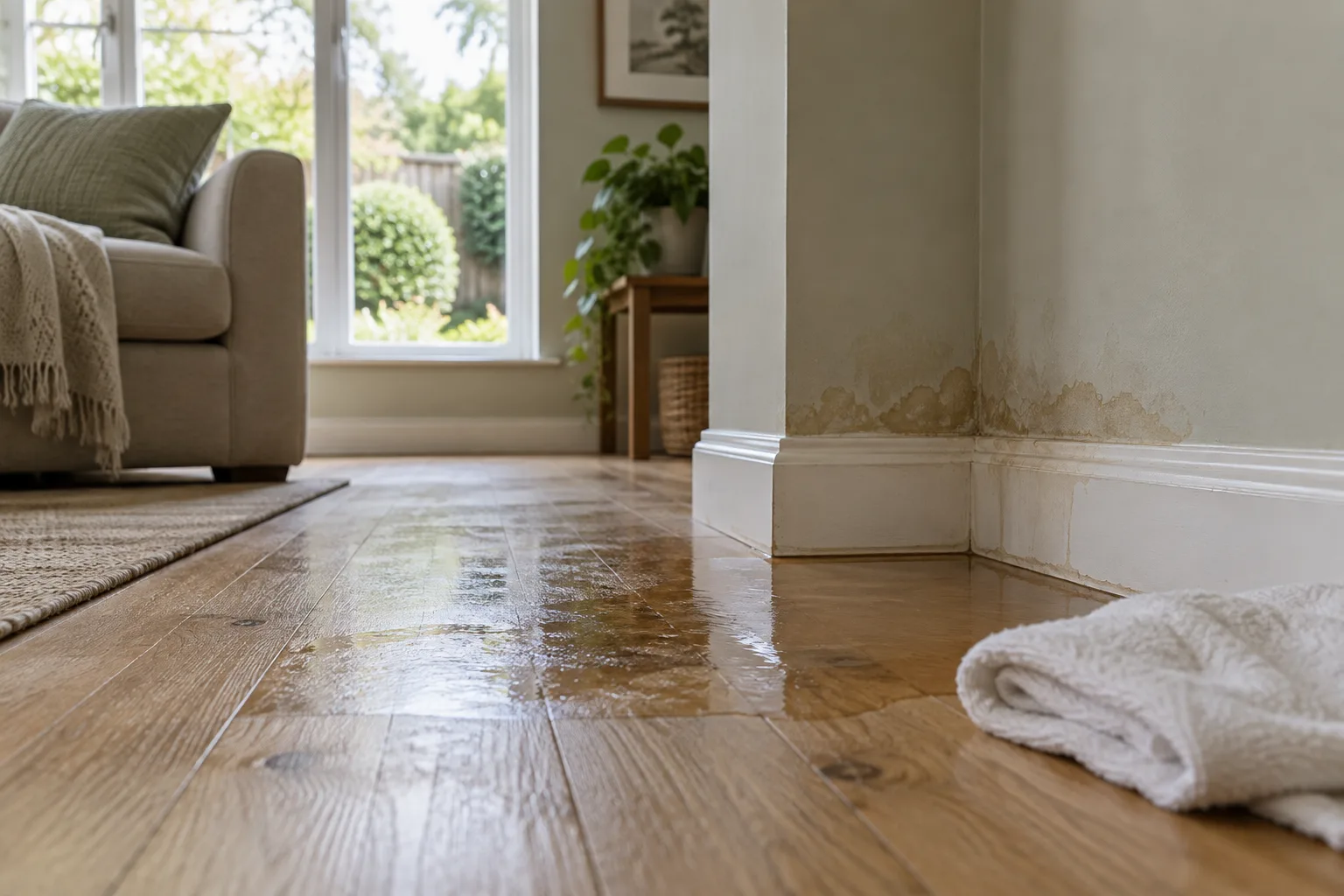
Structural drying is the controlled process of removing trapped moisture from building materials after water is extracted. Extraction alone only removes standing water; framing, subfloor, and drywall stay saturated, so professional drying with air movers and dehumidifiers is needed to prevent warping, rot, and mold.
North Fulton Water Damage Pros is a disclosed marketing and referral service operated by Stratum Relay LLC, a Georgia company. We are not a contractor and do not perform any drying ourselves. We help homeowners request an introduction across Sandy Springs, Roswell, Dunwoody, and the rest of North Fulton with a local structural drying contractor who may do the actual work. You pay nothing for the connection; we may receive a referral fee if a contractor accepts an introduction.
After water extraction removes the visible water, materials remain dangerously wet. Drywall, wood framing, and the subfloor absorb moisture deep into the material, where a mop or wet vac can never reach. Without active drying, that hidden water leads to swelling, rot, and rapid mold growth.
Professional drying solves this by manipulating the air. A contractor balances temperature, airflow, and humidity using commercial equipment so moisture evaporates from materials and is captured before it can settle elsewhere in your home.
What equipment is used for professional structural drying?
Professional structural drying uses commercial air movers to evaporate surface moisture, LGR or desiccant dehumidifiers to remove that moisture from the air, and moisture meters plus thermal imaging to locate and track wet materials. Together these tools dry a structure faster and more completely than household fans ever could.
Airflow and dehumidification work as a team. High-velocity air movers sweep moisture off surfaces and into the air, while LGR (low-grain refrigerant) dehumidifiers or desiccant dehumidifiers pull that humidity back out so the air can keep absorbing more. Household box fans simply move damp air around without removing the water.
Measurement tools guide the whole effort. A contractor may use moisture meters to check materials, thermal imaging to reveal cool, wet areas behind finishes, and psychrometric readings to track temperature and humidity. This is why dehumidification done by a professional is so much more effective than guesswork.
Matching equipment to the job is part of the craft. A small spill might need a couple of air movers, while a flooded basement in Johns Creek or Brookhaven may require an array of units, all sized to the affected space identified during the inspection.
- Commercial air movers to evaporate surface moisture
- LGR and desiccant dehumidifiers to remove moisture from the air
- Moisture meters to measure how wet materials are
- Thermal imaging to find hidden moisture behind finishes
- Psychrometric readings to monitor temperature and humidity
How do moisture mapping and psychrometric monitoring confirm a home is dry?
A contractor establishes a dry standard from unaffected materials, then uses moisture mapping and daily psychrometric monitoring to track progress toward it. Each day, readings from meters and the air confirm materials are losing moisture, so drying ends only when the structure measurably reaches that target.
Drying is verified with data, not opinion. A contractor first measures dry, unaffected materials elsewhere in your home to set a dry standard, then uses moisture mapping to chart how wet the affected materials are. Those maps create a baseline to compare against on every visit.
From there, psychrometric readings track temperature, relative humidity, and grains of moisture in the air, while moisture meters recheck the subfloor, drywall, and framing. If readings stall, a contractor adjusts the placement of air movers and dehumidification equipment to keep progress moving.
This documented approach also protects you with insurers. A daily log of moisture mapping and drying progress is strong claim documentation that the loss was handled promptly and professionally as part of full water damage restoration.
How are framing, subfloor, drywall, and hardwood dried?
Different materials dry differently: framing and subfloor need sustained airflow and dehumidification, drywall may be dried in place or partially removed to reach wall cavities, and hardwood often requires specialized drying mats and careful monitoring to avoid permanent cupping or buckling.
Structural materials demand patience. Wood framing and the subfloor hold moisture deep inside, so a contractor maintains steady airflow and dehumidification until meters confirm the wood has reached the dry standard. Rushing or stopping early risks rot and mold down the line.
Wall and floor finishes need tailored tactics. Drywall can sometimes be dried in place, but when water is trapped in the cavity behind it, a contractor may make small openings or remove a section to dry the framing. Hardwood floors are especially delicate and often require specialized drying mats and close monitoring to prevent cupping.
Knowing which materials can be saved and which must be removed is a judgment call. A contractor makes those decisions based on moisture readings, not guesswork, which is one more reason this work belongs with a professional rather than a DIY restoration attempt.
How does structural drying prevent secondary damage and mold?
Structural drying prevents secondary damage by removing the hidden moisture that causes warping, rot, and mold. Because mold can begin developing within 24 to 48 hours, drying materials to a verified standard quickly denies mold the dampness it needs and protects the home's structure.
Secondary damage is the harm that appears after the initial water event, and it is largely preventable. Trapped moisture causes wood to swell and rot, drywall to crumble, and finishes to delaminate, all of which cost far more to repair than prompt drying would have. Thorough drying simply removes the fuel for that slow-motion damage.
Mold prevention is the other major benefit. In Georgia's humid subtropical climate, with roughly 50 inches of metro Atlanta rain a year, conditions favor growth, and mold can start within 24 to 48 hours. Drying fast and completely is the most reliable way to avoid needing mold remediation after a loss.
Drying to a documented standard also gives you peace of mind. When a contractor may verify that framing, subfloor, and walls have reached the dry target, you can be confident hidden moisture is not quietly undermining your home in Fulton County.
How long does structural drying take, and what does it cost?
Most structural drying takes roughly three to five days, though heavily saturated or hard-to-reach areas can take longer. As a labeled estimate for the Atlanta market, structural drying typically ranges from $2,000 to $6,000, with actual pricing set by an on-site inspection.
Timelines depend on conditions. The volume of water, the materials affected, and the humidity in your home all influence how long drying takes, but a typical job runs about three to five days of monitored drying. A contractor keeps equipment running until moisture meters confirm the dry standard is met, rather than to a fixed clock.
Cost follows scope. As a labeled estimate for the Atlanta market, structural drying typically falls between $2,000 and $6,000, which reflects equipment, monitoring, and the size of the affected area. This is a typical range, not a quote, and your real price depends on an on-site inspection.
Because the inspection fees and written-estimate terms are set by a contractor, you can understand the timeline and likely cost before committing. For a fuller picture of how drying fits with extraction and repairs, review water damage restoration cost across the whole project.
Frequently asked questions
Does North Fulton Water Damage Pros perform structural drying itself?
No. North Fulton Water Damage Pros is a disclosed referral service operated by Stratum Relay LLC. We may introduce you to an available local structural drying contractor who may perform all of the actual drying and monitoring.
Why isn't extracting the water enough on its own?
Extraction only removes standing water. Framing, subfloor, and drywall stay saturated deep inside, where mops and wet vacs can't reach. Professional drying with air movers and dehumidifiers is needed to prevent warping, rot, and mold.
How long does structural drying take?
Most jobs take about three to five days, though heavily saturated areas can take longer. A contractor keeps equipment running and monitors with moisture meters until the structure reaches a verified dry standard.
How much does structural drying cost?
As a labeled estimate for the Atlanta market, structural drying typically runs $2,000 to $6,000, depending on the affected area and equipment needed. A contractor may offer an on-site assessment and written estimate; confirm whether it is offered, what it includes, any fee, and the terms directly.
Can hardwood floors be saved after water damage?
Sometimes. Hardwood is delicate and prone to cupping, but specialized drying mats and close moisture monitoring can save floors if drying begins quickly. A contractor may use meter readings to decide what can be saved versus removed.