How to Prevent Basement Flooding in Atlanta and North Fulton
Need help with your own home?
Tell us your concern. We'll check local contractor availability.
No referral fee · No obligation to hire
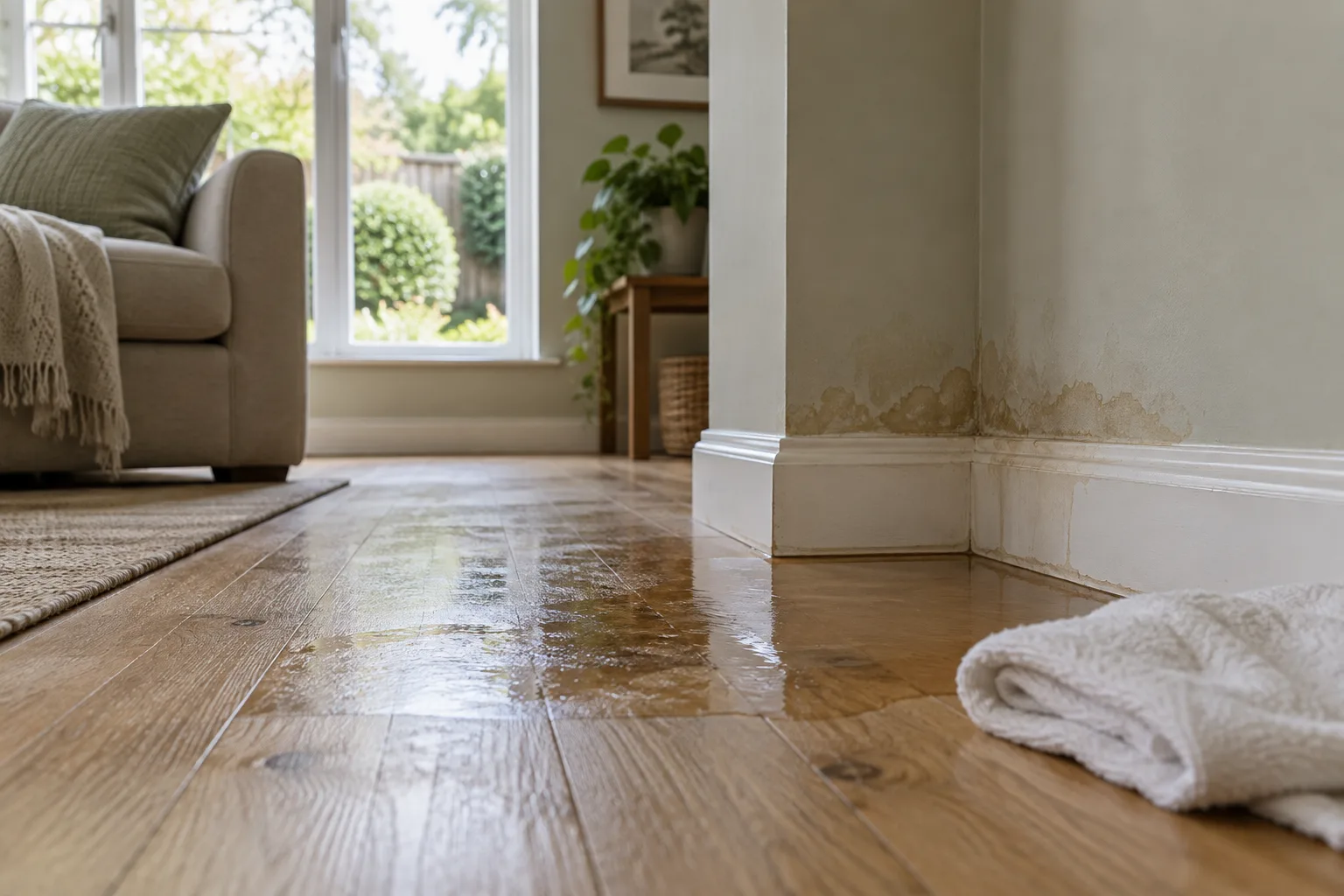
Why do basements flood in the Atlanta area?
Atlanta-area basements flood because the region gets heavy rain — roughly 50 inches per year — over dense clay soil that drains slowly, often combined with poor grading that channels water toward the foundation. When water can't drain away, it builds pressure and seeps through cracks and slabs.
Three local factors gang up on North Fulton basements. First, volume: metro Atlanta averages about 50 inches of rain per year, often in heavy downpours that overwhelm drainage fast. Second, clay soil: the red Georgia clay common across Fulton County drains slowly and holds water against foundations. Third, grading: when the ground slopes toward the house instead of away, rainwater pools at the foundation.
Together these create hydrostatic pressure — water pushing against basement walls and the slab until it finds a way in through cracks, cove joints, or porous concrete. The good news is that nearly every cause is something a homeowner can manage with maintenance and a few targeted upgrades.
North Fulton Water Damage Pros, operated by Stratum Relay LLC, is a disclosed referral service serving Sandy Springs, Roswell, Dunwoody, Alpharetta, Johns Creek, Brookhaven, and the wider North Fulton area. We don't perform the work — if your basement does flood, we may introduce you to a local contractor for an on-site inspection. This page is general guidance, not professional engineering or insurance advice.
How do gutters and downspouts prevent flooding?
Clean, properly sized gutters and downspouts capture roof runoff and carry it away from the house. Extend downspouts at least four to six feet from the foundation so water discharges well clear of basement walls. Clogged or short downspouts dump water right where it can flood your basement.
Your roof sheds an enormous amount of water in an Atlanta storm, and gutters and downspouts decide where it goes. Keep gutters clear of leaves and debris — especially heading into fall — so they actually carry water to the downspouts instead of overflowing along the foundation.
The most common cheap fix is the downspout extension. A downspout that dumps water right at the foundation is feeding your basement; extending it four to six feet or more away from the house moves that water clear of the foundation drainage zone. Splash blocks and buried drain lines that daylight downhill work even better.
This is low-cost, high-impact maintenance you can do yourself in an afternoon, and it prevents a surprising share of basement water problems.
- Clean gutters at least twice a year, more if you have heavy tree cover.
- Extend downspouts 4–6 feet away from the foundation.
- Add splash blocks or buried drain lines that discharge downhill.
- Check that gutters aren't sagging or pulling away from the fascia.
How does grading and drainage stop water?
Proper grading slopes the soil away from your foundation so water flows off rather than pooling against the walls. Aim for the ground to drop about six inches over the first ten feet from the house. Add swales or French drains where surface water collects or flows toward the home.
If gutters control roof water, grading controls everything else. The soil around your home should slope away from the foundation — a common guideline is a drop of about six inches over the first ten feet. Over time, settling soil and landscaping can reverse that slope and steer water back toward the basement, so re-grade low spots with compacted fill as needed.
Where surface water naturally collects or runs toward the house, a swale (a shallow drainage channel) or a French drain can intercept and redirect it. On the heavy clay soils common in North Fulton, managing where water travels across your yard is just as important as managing the roof runoff.
Grading and drainage work hand in hand with your gutters. Fix both and you've addressed the two biggest sources of basement water before it ever reaches the wall.
Do I need a sump pump and battery backup?
If your basement is prone to water or sits low relative to the water table, yes. A sump pump collects water in a pit and pumps it away from the house. A battery backup is essential because Atlanta storms that cause flooding often knock out power exactly when the pump is needed most.
A sump pump is the last line of defense for many basements. Water that makes it to the foundation is collected in a sump pit and pumped out and away from the house. If you already have one, test it a couple of times a year by pouring water into the pit and confirming it kicks on and discharges properly.
The single most overlooked upgrade is a battery backup. The same severe thunderstorms that drive heavy runoff frequently cause power outages — and a primary sump pump is useless without electricity. A backup battery (or a water-powered backup) keeps it running through the outage, which is exactly when basements flood.
Maintenance matters: clear the pit of debris, confirm the float switch moves freely, and make sure the discharge line carries water well away from the foundation, not right back toward it.
- Test the sump pump a couple of times a year by adding water to the pit.
- Install a battery backup to survive storm-related power outages.
- Keep the pit clear and confirm the float switch moves freely.
- Route the discharge line well away from the foundation.
Should I install a backwater valve?
If your home is at risk of sewer backups, yes — a backwater valve is a one-way valve on your sewer line that lets waste flow out but blocks municipal sewage from backing up into your basement during heavy rain. It's a strong defense against hazardous Category 3 black water entering your home.
Heavy Atlanta rains can overload municipal sewer systems and push sewage backward into the lowest drains in your home — usually basement floor drains, tubs, or toilets. A backwater valve (also called a backflow valve) installed on your main sewer line is a one-way gate: waste flows out, but nothing flows back in.
This is about more than water damage. A sewage backup brings Category 3 black water that's a serious health hazard and requires professional remediation with containment, antimicrobial treatment, and HEPA filtration. Preventing it with a backwater valve is far better than cleaning it up. Note that backup of sewers and drains is often excluded from insurance unless you've added a specific endorsement.
Have the valve installed and inspected by a licensed plumber, and clean and check it periodically so it seats properly when you need it.
How do I seal cracks and manage humidity?
Seal foundation cracks with hydraulic cement or polyurethane injection to block seepage, and control basement humidity with a dehumidifier and a vapor barrier. Dry, sealed basements resist both flooding and the mold that follows moisture, keeping the space healthier year-round.
Even a well-drained basement can weep through small foundation cracks. Seal active cracks with hydraulic cement or have larger ones professionally injected with polyurethane. Pay attention to the cove joint where the wall meets the slab, a common entry point, and address it before it widens.
Atlanta's humid subtropical climate means basements stay damp even without a flood, and persistent moisture invites mold. Run a dehumidifier to keep relative humidity in check, add a vapor barrier on walls or crawl-space floors where appropriate, and keep the space ventilated. These steps reduce the conditions mold needs to grow.
Sealing and humidity control round out a layered defense — gutters and grading outside, sump pump and backwater valve at the foundation, crack sealing and humidity control inside.
- Seal active foundation cracks with hydraulic cement or polyurethane injection.
- Run a dehumidifier to control basement humidity.
- Add a vapor barrier on walls or crawl-space floors where appropriate.
- Address the cove joint where the wall meets the slab.
What if my basement floods anyway?
If water is actively spreading, contact an available restoration provider, utility, or emergency services as appropriate first; our referral form does not dispatch or guarantee a response. Stay out of standing water and electrical hazards, stop a source only if safe, document the damage, and start drying promptly. Mold can begin within 24–48 hours.
If your basement floods, prioritize safety and an actual available response: contact a restoration provider, utility, or emergency services as appropriate. Our referral form only requests an introduction; it does not dispatch or guarantee a crew. Stay out of contaminated or electrically hazardous water.
Professional structural drying may use air movers, dehumidifiers and moisture measurements, depending on the building and contamination. Ask a contractor to explain the proposed methods, relevant standards, drying criteria and any documentation they offer. We do not verify or guarantee those services; the contractor sets the scope and your insurer decides any claim.
As a labeled estimate for the Atlanta market, structural drying commonly runs $2,000–$6,000 and full restoration $3,000–$30,000+, but actual pricing depends on an on-site inspection, and inspection fees and written-estimate terms are set by a contractor. Whether you're dealing with basement flooding in Sandy Springs, need water damage restoration in Dunwoody, or are anywhere in North Fulton, you can request an introduction to a local restoration contractor.
Frequently asked questions
What is the most common cause of basement flooding in Atlanta?
Poor exterior water management combined with heavy rain over slow-draining clay soil. Clogged or short downspouts and grading that slopes toward the house send water straight to the foundation, where it builds pressure and seeps in. Fixing gutters and grading prevents many basement floods.
Is a sump pump battery backup really necessary?
For flood-prone basements, yes. The severe storms that cause flooding often cause power outages at the same time, leaving an electric sump pump useless. A battery or water-powered backup keeps it running through the outage — exactly when you need it most.
What does a backwater valve do?
A backwater valve is a one-way valve on your sewer line that lets waste flow out but blocks municipal sewage from backing up into your basement during heavy rain. It helps prevent hazardous Category 3 black water from entering your home. Have a licensed plumber install it.
How much does it cost if my basement floods?
As a labeled estimate for the Atlanta market, structural drying commonly runs $2,000–$6,000 and full restoration $3,000–$30,000+. Actual pricing depends on an on-site inspection, and inspection fees and written-estimate terms are set by a contractor. We may introduce you to a local contractor.
Does North Fulton Water Damage Pros do flood prevention work?
No. We are a disclosed referral service, not a contractor. We help North Fulton homeowners request an introduction to a local contractor for water damage cleanup, drying, and inspection. This page is general information, not professional engineering or insurance advice.